
How to Write in Coffee Shops Without Distraction
Why a Change of Scene Sharpens the Mind
Most writers I know have a café they treat as a second desk, and there is a sound reason for it. Mild background noise, the gentle clatter of cups and half-heard conversation, can be easier to work against than perfect silence. Silence leaves you alone with your own looping thoughts; a low hum gives the restless part of your brain something to chew on while the rest of you gets on with the sentence.
There is also the accountability of being seen. Sitting with a notebook or a laptop in public makes scrolling feel faintly embarrassing in a way that doing it on your sofa never does. And there is the ritual: the walk, the order, the settling of the bag, the first sip. All of it tells your brain that work is about to begin.
It fails when you treat the café as an office. Long, vague, open-ended sessions drift into refills, eavesdropping and checking your phone. The trick is to treat the café as a sprint track, not a lounge.
Choose Your Seat Like a Chess Player
Where you sit decides half the session. Do a slow lap before you commit, even if it feels slightly awkward.
- Corner seat, back to a wall. You want the room in front of you, not behind you.
- A clear sightline to the door and the counter so you are not swivelling round every time they swing open.
- Away from the grinder, the till queue, the dishwasher hatch and the speaker. These are the three or four loudest square feet in any café.
- A firm upright chair, not the deep sofa. Slouching is the enemy of a forty-minute block.
- A table big enough for a laptop and a notebook side by side. Tiny round tables look charming and are useless.
- Near a plug if you need one, but not so near the counter that strangers stand over your shoulder.
Timing matters too. Arrive just after the morning rush or in the mid-afternoon lull. If it is a small independent place, ask whether it is alright to work for an hour; almost everyone says yes to someone who asks and orders properly.
Build a Portable Bubble
Noise-cancelling over-ear headphones are the single best investment for a writing bag. They do not create silence, they lower the floor, which is exactly what you want. The choice of what you play through them matters more than the headphones themselves.
Lyrics compete with the sentence you are forming. If you are writing prose, keep it instrumental: ambient, solo piano, strings, film scores, quiet jazz without a vocalist. Brown noise or rain sounds are excellent for masking the specific clatter of crockery, which is the noise most likely to break your concentration. Keep the volume low enough that you can still hear if someone speaks to you.
If the grinder is truly brutal, foam earplugs underneath the headphones will save the session. And if you love the atmosphere of a café but yours is too loud, you can borrow the sound without the crowd. Though at that point, you may as well be at home.
Set a Timer and Give the Session a Job
Before you open the laptop or uncap the pen, write one sentence at the top of the page: the job. Draft the market scene. Edit the first eight hundred words. Outline chapter four. One job, one session. If you cannot name it in a sentence, you are not ready to write yet, and no amount of coffee will fix that.
Then set a timer. Twenty-five minutes if you are rusty, forty-five if you are deep in a project. Two or three blocks make a good session, with a genuine two-minute break between them: stand up, look out of the window, do not open anything with a feed.
When the timer rings, stop. Even mid-sentence. Stopping mid-sentence is a gift to your future self, because next time you sit down you already know the next four words. And resist the urge to buy a second coffee purely to justify staying longer. Leave while it is still working, and you will want to come back tomorrow.
What Earns Its Place in the Bag
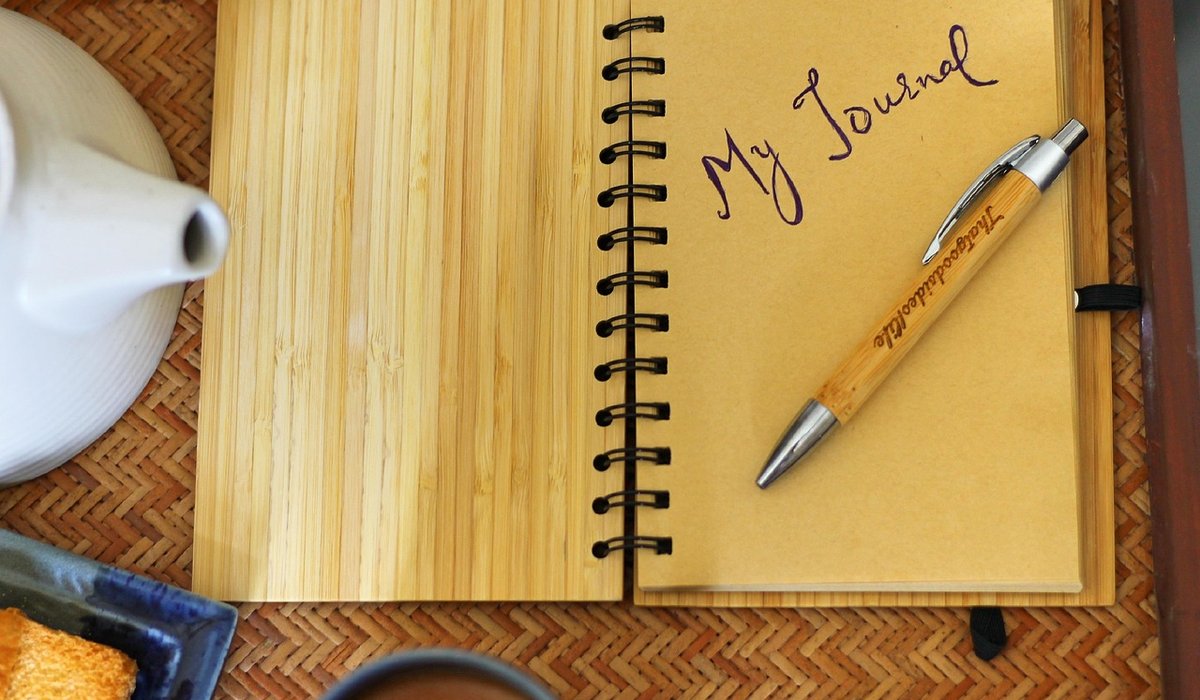
- A small notebook and a pen that does not skip. Paper for thinking, laptop for typing. The notebook catches the ideas that arrive while you are supposed to be doing something else.
- A charged laptop and a charger, because a dying battery is the fastest route to distraction.
- Earplugs as backup for the headphones.
- A bottle of water, and a proper order rather than a single cup nursed for three hours.
- A thin scarf or folded cushion. Café chairs are designed for people who are leaving.
Sit in daylight if you can, and keep the table clear apart from what you are actually using. Clutter on the table becomes clutter in the head.
Reading, and the Cosy Library at Home
The café is for output. The armchair is for input, and the two habits feed each other. Carry a book alongside the notebook. Ten minutes of reading before you start writing warms up the ear, and reading on the way home is a far better decompression than a phone.
Keep a commonplace book: a single notebook for lines you love, copied out by hand. Copying a good sentence teaches you more about rhythm than reading it three times.
At home, build the cosy library deliberately, even if it is one corner of one room. A chair with real back support, a lamp at shoulder height so the light falls on the page, a shelf within arm's reach, a side table sized for a mug, and a basket for the books currently in play. Keep the book you are reading visible rather than filed away; a book you cannot see is a book you will not open. Finish what deserves finishing and abandon the rest without guilt, and reread the ones that taught you something. A good home library is not a display. It is the place you go when the café closes and the work is still not quite done.

4 Comments