
iGaming Secrets: 5 Proven Tips to Beat the House
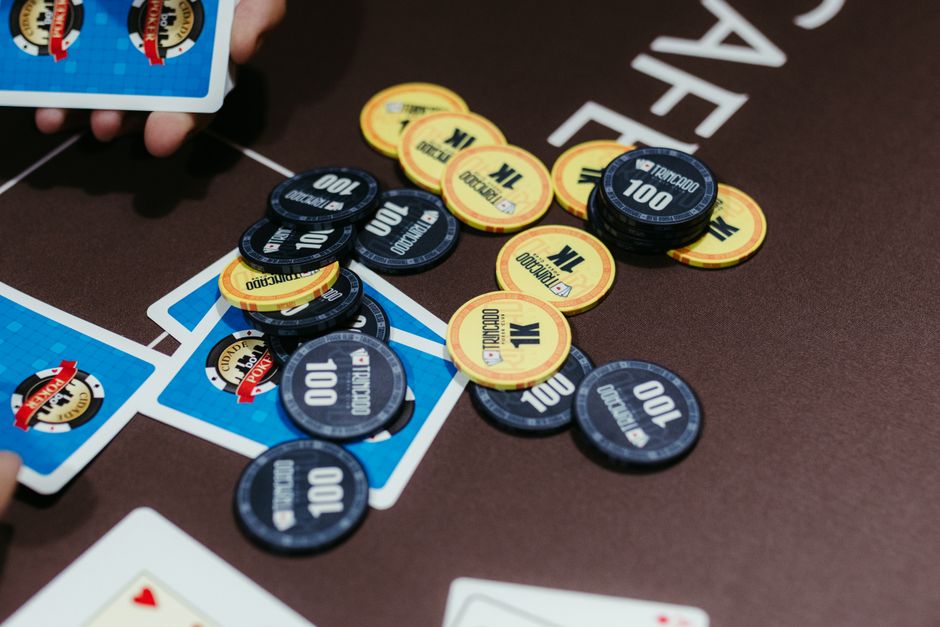
You're sitting at a blackjack table in Macau, the dealer's showing an ace, and your palms are sweating. Or maybe you're at home, staring at a slot machine that hasn't paid out in 50 spins. We've all been there. The thrill of iGaming is undeniable, but the house always has an edge—unless you know how to play smart. After a decade of grinding everything from online poker to live dealer roulette, I've learned that success isn't about luck; it's about strategy, discipline, and a few insider tricks. Let's cut through the noise and get to what actually works.
1. Master Bankroll Management (Before You Bet a Dime)
I can't stress this enough: bankroll management is the difference between a fun hobby and a financial disaster. It's not sexy, but it's the single most important skill in iGaming. Here's the deal—decide on a dedicated gambling budget that you can afford to lose entirely. Not your rent money, not your grocery fund. Then, break it into units. A unit is your standard bet size, typically 1-2% of your total bankroll.
For example, if you have a $1,000 bankroll, your unit should be $10 to $20. Why? Because even the best poker players endure downswings of 20 buy-ins. If you're betting $50 a hand with a $1,000 roll, you're busted after 20 losses—and that happens more often than you think. In slots, the same logic applies: never bet more than 0.5% of your bankroll per spin if you want to survive long enough to hit a bonus round. kết quả bóng đá offers a practical breakdown of the topic.
Here's a quick checklist for smart bankroll management:
- Set a loss limit and a win limit before you start. Walk away when you hit either.
- Never chase losses. That's how $100 turns into $500 gone.
- Keep gambling funds separate from your everyday bank account.
- Track every session in a simple spreadsheet—you'll spot patterns fast.
Trust me, this one habit will save you more money than any 'system' ever will.
2. Slot Selection: It's Not All Random
Slots are the most popular iGaming game, but most players pick them based on flashy graphics or a catchy name. Big mistake. Not all slots are created equal. The key metric is RTP—Return to Player. An RTP of 96% means the game pays back $96 for every $100 wagered over millions of spins. Online slots typically range from 92% to 98%, and that difference is huge.
Let's say you spin $10,000 worth over a year. At 92% RTP, you lose $800. At 97%, you lose only $300. That's a $500 swing just from choosing the right game. So, before you play, check the RTP in the game's info section (it's usually in the rules or help tab). Also, look at volatility: high-volatility slots pay less often but can hit massive jackpots, while low-volatility slots pay small amounts frequently. Match volatility to your bankroll and patience.
Here are three slot myths to ignore:
- 'Hot' or 'cold' machines. Random number generators (RNGs) have no memory. Every spin is independent.
- Near misses mean it's about to hit. No, that's just the RNG teasing you.
- Betting max always triggers the bonus. False—bonus frequency is predetermined by the math model, not your bet size.
Instead, focus on games with high RTP and bonuses that suit your style. And always play the free demo first to get a feel.
3. Poker: Position and Patience Trump Aggression
Poker is the only iGaming game where you play against other players, not the house. That means skill can overcome luck in the long run. But too many newcomers think they need to bluff like Daniel Negreanu from day one. Wrong. The most profitable players are patient and position-aware.
Position refers to where you sit relative to the dealer button. The later your position, the more information you have—you see what others do before you act. In Texas Hold'em, playing tight from early position (only premium hands like AA, KK, QQ, AK) and loosening up from the button is a proven strategy. I've seen players double their win rate just by folding more hands upfront.
Here's a simple pre-flop strategy for beginners:
- Early position (first three seats): Play only top 10% of hands.
- Middle position: Expand to top 20%—add pairs 77+, AJ, KQ.
- Late position (cutoff and button): Play top 30-40%—suited connectors, small pairs, any ace.
- Blinds: Defend cautiously; don't call raises with junk.
Also, pay attention to bet sizing. A min-raise often signals weakness, while a 3x raise from early position screams strength. And never, ever tilt. If you lose a bad beat, take a 10-minute break. Emotional decisions cost more than any bad card.
4. Live Betting: Timing Is Everything
Sports betting has exploded in the iGaming world, and live betting—wagering during a match—is where sharp bettors thrive. The odds shift with every play, and if you can predict momentum swings, you can find value. For example, in basketball, a team down by 10 points in the second quarter often has live odds that are inflated. If you know they're a strong second-half team, that's a prime opportunity.
But don't just bet on gut feeling. Use data. Look at stats like possession, shots on goal, or free-throw percentage. In soccer, a team dominating possession but trailing 0-1 might be a great live bet to win or draw. The key is to act fast—live odds change in seconds. Set alerts for specific triggers (e.g., a red card or a key injury) and have your bet ready.
One more tip: avoid betting on your favorite team. Emotions cloud judgment. I've lost count of how many times I've backed my club at terrible odds just because I believed. Trust the numbers, not your heart.
5. Bonuses and Promotions: Read the Fine Print
Online casinos and sportsbooks lure you in with generous bonuses—100% match up to $500, 50 free spins, risk-free bets. They're great, but only if you understand the terms. The devil is in the wagering requirements. A 100% bonus with 40x wagering means you have to bet the bonus amount 40 times before you can withdraw any winnings. If you deposit $100 and get a $100 bonus, you need to wager $4,000. At a 5% house edge, that's $200 in expected losses—more than the bonus itself.
So, before claiming any offer, check these three things:
- Wagering requirement: Lower is better. Under 30x is decent; under 20x is great.
- Game contributions: Slots usually count 100%, but table games like blackjack might only count 10%. That means you'd need to bet 10x more.
- Time limits: Some bonuses expire in 7 days. If you can't clear it, you lose it.
Also, look for 'sticky' vs. 'non-sticky' bonuses. Non-sticky means the bonus is deducted when you withdraw, but you keep winnings. Sticky means the bonus stays in your account and is lost when you cash out. Always prefer non-sticky.
My advice: only take bonuses that align with your play style. If you're a low-volume player, a huge bonus with high wagering is a trap. Sometimes, playing without a bonus is better—you keep all your winnings and have no restrictions.
Final Thoughts: Play Smart, Not Hard
iGaming is entertainment first. If you're not having fun, you're doing it wrong. But that doesn't mean you can't tilt the odds slightly in your favor. Bankroll management keeps you in the game, smart slot selection stretches your dollar, poker strategy rewards patience, live betting demands timing, and bonus hunting requires reading the fine print. None of this guarantees wins—the house always has an edge—but it turns reckless gambling into calculated recreation. So next time you fire up a slot or join a poker table, remember: the smartest bet is the one you've thought through. Now go out there and play like you mean it.

4 Comments